Ohio’s climate, with its mix of heavy rains, seasonal snowmelt, and high water tables in certain areas, creates persistent challenges for managing water on residential, commercial, and construction sites. Whether you are building a foundation, maintaining a commercial facility, or managing farmland, you’ve likely encountered the need for water control. But when it comes to drainage vs dewatering, how do you determine which solution is right for your specific project?
Understanding the distinction is crucial for anyone looking to avoid structural damage, soil erosion, construction delays, or mold and mildew. In this blog, we’ll explore the difference between drainage and dewatering, when each is necessary, and the importance of working with experienced professionals. If you’re in Ohio, this guide will help you navigate the landscape of drainage solutions and dewatering services with clarity and confidence.
The Difference Between Drainage and Dewatering
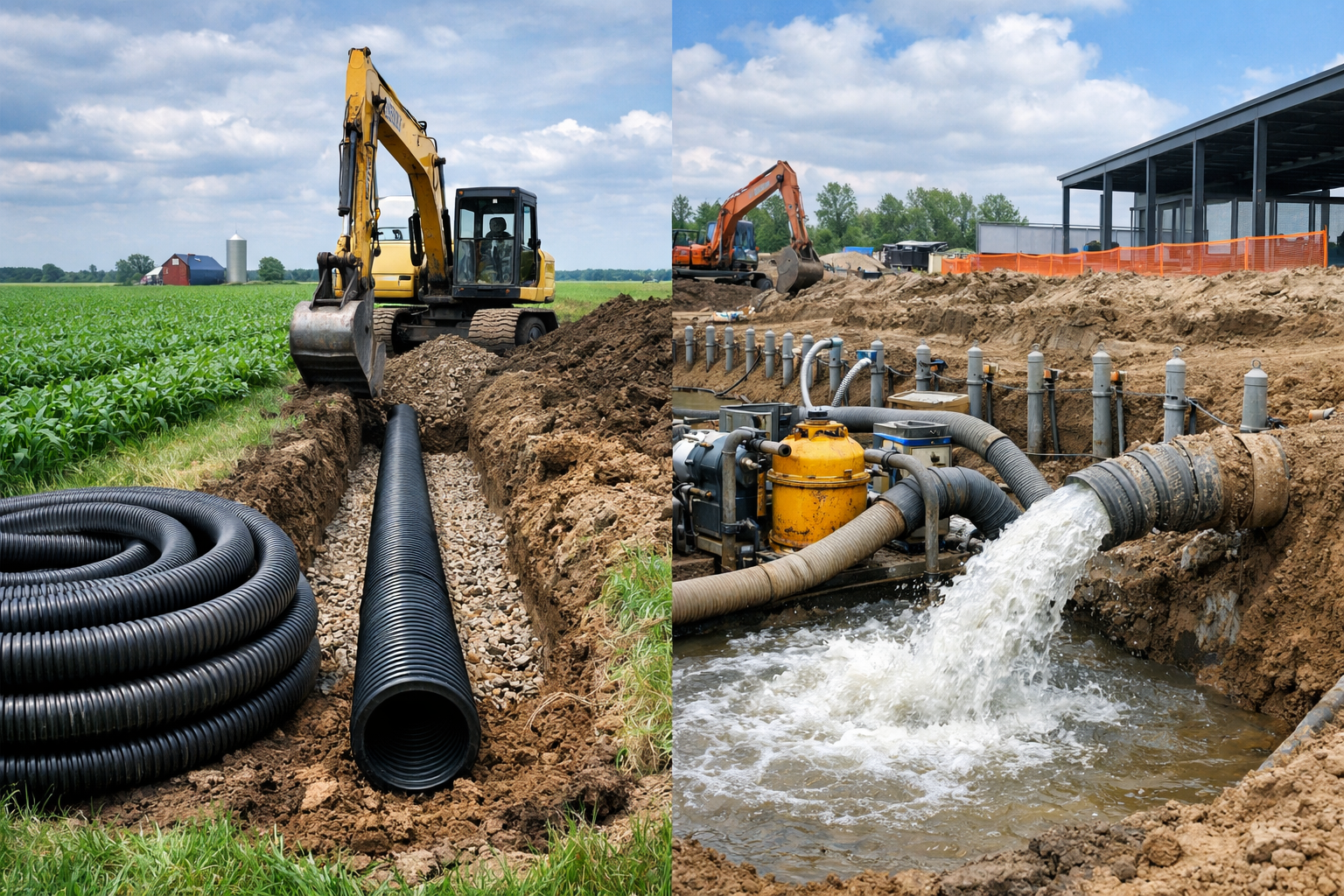
Although they both involve removing water, drainage and dewatering are not the same. Drainage is a long-term system designed to manage and redirect surface or groundwater away from buildings or infrastructure. It is a preventive measure that ensures water does not accumulate where it shouldn’t. Drainage solutions in Ohio can include French drains, surface grading, sump pumps, or stormwater systems, and they are typically permanent installations.
On the other hand, dewatering is a temporary process used to remove water from a particular area, often during excavation or construction. It is a proactive technique to make a site workable by lowering the water table or removing standing water. Dewatering is commonly required during projects like foundation excavation, trenching, or pipeline installation. Understanding the difference between drainage and dewatering can help property owners and contractors select the correct method for their situation.
Dewatering vs Drainage for Excavation Projects
In excavation work, especially in areas with a high water table like parts of Ohio, dewatering is essential. Before any major digging can begin, contractors often need to lower groundwater levels to prevent flooding or collapse. Dewatering involves techniques such as wellpoints, sump pumping, or deep wells. Each method is chosen based on the soil type, water volume, and project requirements. The dewatering process explained by professionals generally includes site assessment, system design, installation, monitoring, and discharge according to local regulations.
Drainage systems, while important to maintain dry conditions after construction, are not sufficient for managing water during excavation. This is where the confusion around dewatering vs drainage for excavation often arises. Dewatering is immediate and intensive, while drainage is built to handle water over time. If you are preparing a site for a new structure, contacting a dewatering expert in Ohio ensures your work can proceed safely and without delay.
Choosing the Right Drainage Solutions in Ohio
Ohio’s diverse geography, from the flat farmlands of the northwest to the rolling hills of the southeast, requires a range of drainage approaches. Poor drainage can lead to flooded basements, waterlogged fields, or deteriorating foundations. A drainage company in Ohio will assess the topography, soil composition, and water flow to develop a custom solution for your needs.
Typical drainage solutions in Ohio include surface drains to manage runoff, French drains to redirect groundwater, and downspout extensions to move water away from structures. These systems are particularly important in older neighborhoods or rural properties without municipal stormwater systems. Without proper drainage, water can pool around homes or buildings, leading to foundation cracks and mold growth. If you notice standing water after rain or soggy areas in your yard, it’s time to consider permanent drainage options.
Investing in the right drainage system is not just about comfort, but about long-term property protection. Unlike dewatering, which addresses immediate needs during construction, drainage ensures your property remains safe and usable year-round.
When You Need Dewatering Services in Ohio
For construction managers, contractors, or homeowners planning major excavation projects, dewatering is not just a best practice; it’s often a legal requirement. Ohio has strict environmental regulations for discharging groundwater and protecting nearby ecosystems. A professional dewatering company in Ohio will handle both the technical and compliance aspects of the process.
Dewatering services in Ohio are essential when working on utility installations, roadworks, or large-scale landscaping. In these cases, the ground may be saturated, making digging unsafe or even impossible without water removal. Temporary dewatering pumps and systems allow work to continue efficiently, keeping timelines on track.
Moreover, understanding the dewatering process explained by experts can make a difference in project success. It typically starts with a hydrogeological assessment, followed by system design and setup. Contractors may use methods such as wellpoints for shallow water removal or deep wells for projects below the water table. The goal is always to keep the work area dry until construction is complete.
Choosing the Right Experts: Drainage and Dewatering Companies in Ohio
Working with experienced professionals is critical when choosing between drainage vs dewatering. Not all contractors have the specialized knowledge or equipment to handle water management effectively. Whether you are dealing with ongoing moisture issues or planning a new build, it’s vital to consult a drainage company or dewatering expert in Ohio who understands local conditions.
A qualified drainage company in Ohio will provide comprehensive inspections, recommend the best long-term systems, and handle installations with minimal disruption to your property. They are well-versed in managing issues like clay-heavy soils, which are common in the state and can exacerbate drainage problems.
Meanwhile, a dewatering expert in Ohio will come equipped with pumps, filtration systems, and a clear plan to remove water safely and legally. They understand site logistics, permit requirements, and environmental considerations, which are especially important when discharging into nearby waterways or storm drains.
Don’t leave water management to guesswork. Whether it’s an emergency on a job site or a chronic drainage problem around your home, engaging with the right specialists will ensure you get a solution tailored to your unique situation.
Conclusion
Understanding the difference between drainage and dewatering is key to managing water effectively, especially in a climate like Ohio’s. If your concern is with surface runoff or groundwater intrusion over time, permanent drainage solutions are the right path. But if you are in the midst of a construction or excavation project, dewatering services are essential to keep the work site dry and safe.
Making the right decision between drainage vs dewatering comes down to the nature of the issue, the urgency of the situation, and the long-term goals for your property or project. In Ohio, where weather and soil conditions can pose significant challenges, relying on a trusted drainage company or dewatering company is the smartest move.
Professionals can offer solutions that are not only effective but also compliant with local regulations. Whether you need a system that protects your home year-round or a short-term setup to move a project forward, expert advice will ensure success.
Before you break ground or install another sump pump, take the time to consult with a drainage or dewatering expert in Ohio. Your property’s safety and your project’s success depend on choosing the right water management approach.
Need Septic Contractors in Bethel, OH?
Gullett Sanitation Services, Inc. offers mobile de-watering of sludge and slurries in and around Bethel, OH, utilizing Roediger belt filter presses, as well as services and repairs on all major brands of home aeration systems. We also work with jet aeration and cleaning for sewer system lines (up to 8 inches in diameter), permits and consultation for biosolids, the transportation of non-hazardous wastewater, sludge removal from all types of waste lagoons, service and repairs on residential sewer systems, and the removal of grit, rags, and debris from anaerobic or aerobic digesters. Give us a call today and let us be your septic and dewatering service in Ohio!