
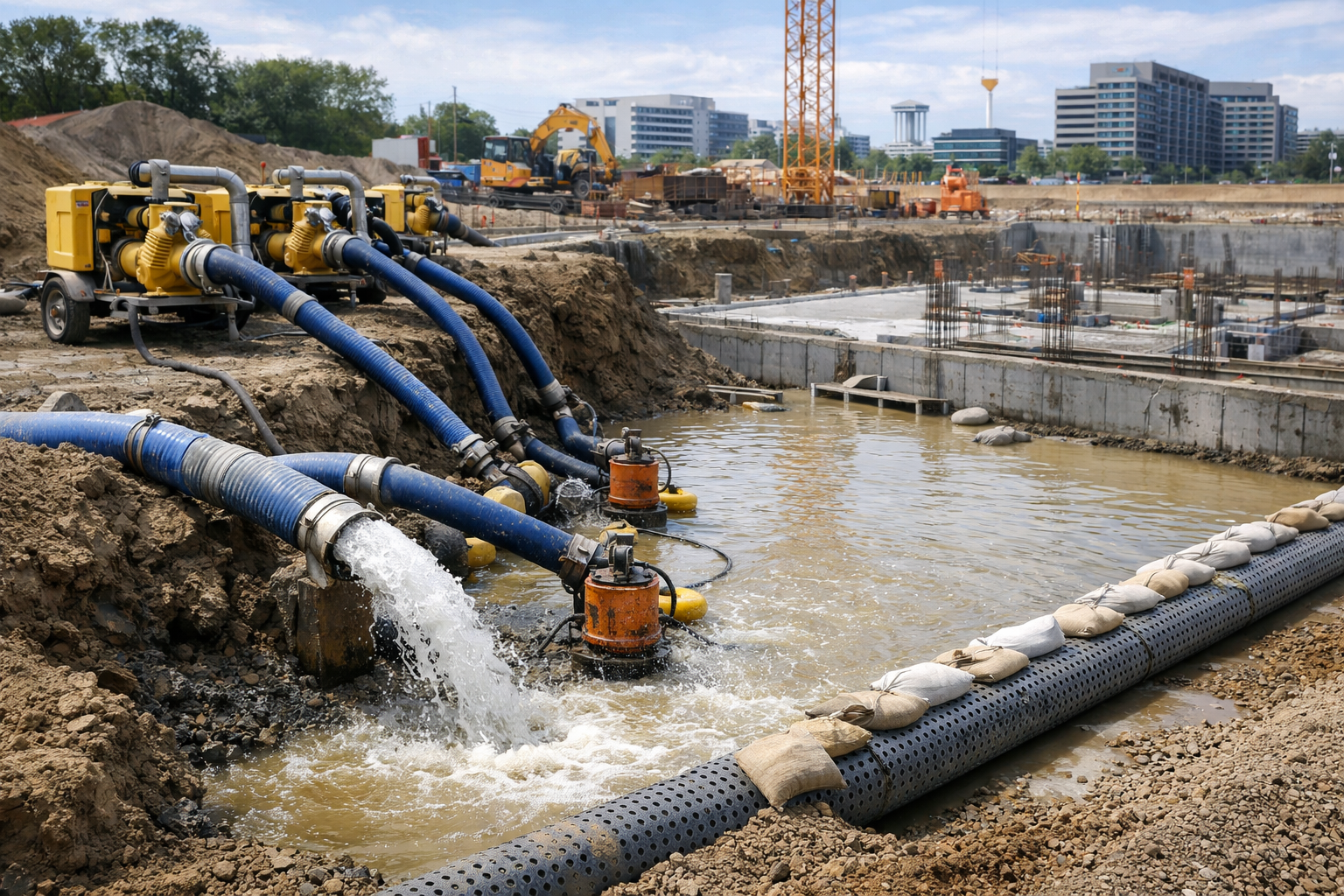
Construction dewatering plays a vital role in building and infrastructure projects, especially in areas like Central Ohio where groundwater conditions can present major challenges. Whether the project involves high-rise buildings, commercial sites, roadways, or utility installations, controlling subsurface water is essential for safety, efficiency, and regulatory compliance.
In Central Ohio, the geology and seasonal weather patterns contribute to high water tables and inconsistent soil saturation levels, which complicate excavation and foundation work. For these reasons, understanding why construction dewatering is required is crucial for contractors, developers, and engineers working in the region. A solid grasp of the dewatering process ensures that projects move forward without unnecessary delays, hazards, or environmental violations.
Why Construction Dewatering Is Required in Central Ohio
The primary reason construction dewatering is required on building sites is to remove excess groundwater from excavations. Groundwater can seep into open pits, trenches, or foundation areas, creating unstable conditions for workers and equipment. When water is not removed properly, it can lead to soil erosion, increased pressure on retaining structures, and delays in construction schedules.
In Central Ohio, the clay-rich soils and unpredictable rainfall further complicate groundwater management. During excavation, especially below the water table, the natural influx of water must be controlled to maintain dry and stable working conditions. Without dewatering, foundation footings can shift or settle unevenly, compromising the structural integrity of the building.
Another critical factor is safety. Water in excavated areas increases the risk of accidents, including slips, equipment malfunctions, and cave-ins. Effective construction dewatering creates a safer job site by stabilizing the ground and improving visibility and access for workers.
Moreover, regulatory compliance is a pressing concern. Ohio enforces strict environmental guidelines, and construction dewatering must be managed in accordance with these regulations. Improper water discharge can contaminate surface water or stormwater systems, leading to costly fines and work stoppages.
Dewatering Requirements for Excavation in Ohio
The state of Ohio outlines specific dewatering requirements for excavation projects, including water treatment and discharge protocols. Construction sites that pump groundwater must often obtain permits and implement measures to prevent sediment-laden water from entering nearby streams, sewers, or drainage systems. This level of oversight ensures that dewatering operations do not negatively impact the surrounding environment.
For contractors working in Central Ohio, understanding these dewatering requirements is essential. Water removed from an excavation site must be filtered or treated before disposal, and flow rates must be carefully monitored. Failure to comply with dewatering regulations can result in permit violations or the need for costly remediation.
Furthermore, site-specific factors determine the type and extent of dewatering required. The depth of the excavation, soil permeability, and proximity to water bodies all influence the dewatering strategy. This complexity makes it essential to engage a qualified dewatering contractor in Central Ohio who can assess the conditions and recommend appropriate solutions.
Choosing a Construction Dewatering Contractor in Central Ohio
Selecting the right construction dewatering contractor in Central Ohio is key to the success of a project. A local contractor brings an understanding of regional groundwater conditions, permitting requirements, and best practices for dewatering systems. Their expertise helps reduce risk and ensure compliance throughout the construction phase.
An experienced dewatering company in Central Ohio can offer customized solutions, including wellpoint systems, deep wells, sump pumping, or vacuum-assisted systems. Each method is suited to different excavation depths and soil types, and the contractor’s recommendations will be tailored to the project’s specific needs.
Additionally, a reputable contractor can provide more than just pump installation. They typically manage the entire dewatering process, from design and permitting to monitoring and system decommissioning. This full-service approach streamlines communication and ensures accountability across all phases of construction.
It is also important to consider the contractor’s track record and equipment inventory. A dewatering expert in Central Ohio will have access to high-performance dewatering pump services that can handle large volumes of water efficiently, even under difficult site conditions. Their knowledge can also help reduce operating costs by optimizing pump selection, layout, and run times.
The Dewatering Process for Building Sites
The dewatering process for building sites involves several critical steps, each of which contributes to creating a dry and stable work environment. The process typically begins with a site assessment, where hydrogeological surveys determine the water table depth, soil conditions, and expected inflow rates.
Based on these findings, the construction dewatering contractor designs a system to remove and control groundwater. This may involve placing wellpoints along the perimeter of the excavation or installing deep wells that draw water from below the construction zone. In some cases, sump pumps or eductors are used to manage localized water pockets.
Once the system is operational, the water is continuously pumped away from the site, often passing through sediment tanks or filtration systems to meet Ohio’s dewatering compliance standards. Treated water is then discharged according to regulatory guidelines, either into municipal storm systems or approved natural bodies.
Monitoring is a key part of the dewatering process. Sensors, gauges, and flow meters help ensure that the system is functioning properly and that discharge water remains within acceptable quality limits. The construction dewatering contractor remains on-site or on-call to manage adjustments, troubleshoot issues, and ensure compliance with all applicable regulations.
When the construction phase is complete, the dewatering system is safely shut down and removed. The site is then stabilized to prevent post-construction water issues or erosion. This final phase ensures the long-term success of the project and reduces the likelihood of future foundation problems.
Meeting Dewatering Compliance in Ohio
Dewatering compliance in Ohio is not optional. Contractors must adhere to environmental and construction codes that govern water removal, treatment, and discharge. These rules protect public waterways and ecosystems from the harmful effects of untreated or improperly managed construction water.
Permits are often required for dewatering activities, especially when discharging into stormwater systems or streams. The permitting process typically involves submitting detailed plans that outline the dewatering method, anticipated flow volumes, and water quality treatment measures. Authorities will evaluate the environmental impact before granting approval.
Once the system is active, compliance continues through regular monitoring and reporting. Sediment levels, chemical contamination, and pH must be kept within state-mandated thresholds. In Central Ohio, local agencies may also inspect construction sites to ensure that dewatering systems are operating as designed and that runoff does not damage adjacent properties.
Engaging a certified dewatering expert in Central Ohio simplifies the compliance process. These professionals understand the nuances of local and state requirements and can help contractors avoid costly mistakes. They also assist in preparing documentation, managing inspections, and responding to any regulatory inquiries that arise during the project.
Conclusion
Construction dewatering is a critical component of building safely and efficiently in Central Ohio. With high water tables and strict environmental regulations, managing groundwater is not just a technical requirement, but a legal and safety necessity. Whether dealing with shallow foundations or deep excavations, understanding why construction dewatering is required helps contractors prepare for the unique challenges posed by the region’s conditions.
From understanding Ohio’s dewatering requirements for excavation to selecting a capable dewatering company in Central Ohio, each decision shapes the success of the project. By working with a knowledgeable construction dewatering contractor, site managers can ensure that every stage of the process, from planning to compliance, is handled with professionalism and precision.
As construction activity continues to grow in Central Ohio, the demand for skilled dewatering services and pump solutions will only increase. Partnering with the right dewatering expert in Central Ohio ensures that projects are not only completed on time and within budget, but also in full alignment with environmental and safety standards.
Need Septic Contractors in Bethel, OH?
Gullett Sanitation Services, Inc. offers mobile de-watering of sludge and slurries in and around Bethel, OH, utilizing Roediger belt filter presses, as well as services and repairs on all major brands of home aeration systems. We also work with jet aeration and cleaning for sewer system lines (up to 8 inches in diameter), permits and consultation for biosolids, the transportation of non-hazardous wastewater, sludge removal from all types of waste lagoons, service and repairs on residential sewer systems, and the removal of grit, rags, and debris from anaerobic or aerobic digesters. Give us a call today and let us be your septic and dewatering service in Ohio!