
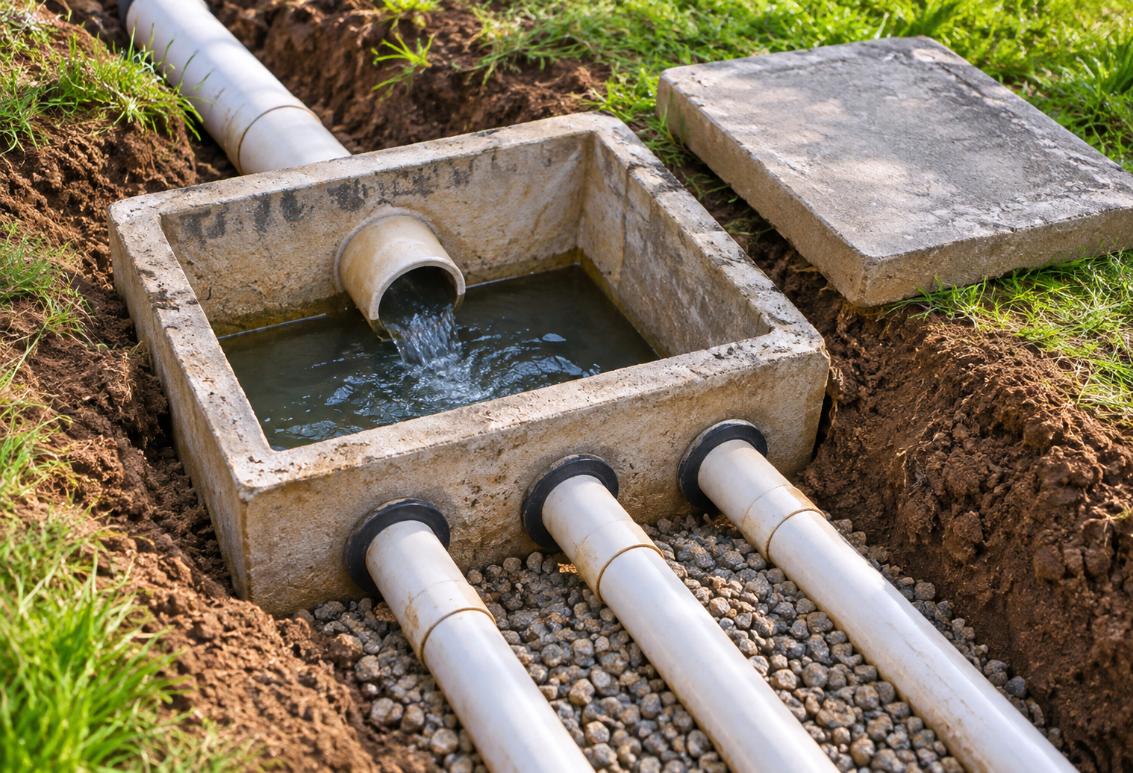
Your septic system handles wastewater every day, but have you ever wondered what happens after that water leaves the septic tank? Most homeowners in Bethel, OH, are familiar with the tank itself, and many have heard about the importance of protecting their drain field. However, there’s another component that can play an important role in keeping everything working properly: the septic distribution box. Although it’s usually buried underground and completely out of sight, problems with this small box can affect how wastewater moves through your system.
A septic distribution box, often called a D-box, directs wastewater from the septic tank into multiple drain field lines. In systems designed to use one, the box helps distribute wastewater among the connected lines so that the soil treatment area can function as intended. When the box becomes clogged, cracked, tilted, or otherwise damaged, wastewater may flow unevenly or back up into the system.
For homeowners throughout Clermont County and surrounding Southwest Ohio communities, understanding distribution box problems can help you recognize when professional attention is needed. Several important things are worth knowing:
-
A distribution box helps direct treated septic tank effluent into the connected drain field lines.
-
A tilted distribution box may cause more wastewater to enter certain lines than others.
-
Wet areas, unpleasant odors, and unusually green grass can indicate septic problems, but they don’t automatically mean the distribution box is responsible.
-
Some distribution box issues can be corrected through appropriate repairs, while more extensive damage may require replacement.
-
Routine inspections and responsible septic system use can help identify developing problems before they become more complicated.
At Gullett Sanitation Services Inc., we’ve been helping homeowners and businesses manage septic and wastewater systems since 1942. Based in Bethel, Ohio, our team provides septic tank services, residential sewer system repairs, wastewater maintenance, and troubleshooting throughout the surrounding area. We understand that most homeowners aren’t interested in becoming septic system experts. They simply want to understand what’s happening, recognize potential problems, and know when it’s time to call for help.
What Does a Septic Distribution Box Do?
A septic distribution box directs liquid wastewater from the septic tank into the drain field lines connected to it. In a conventional gravity-fed system with multiple distribution lines, the box provides a junction where wastewater can be divided among the available treatment areas. This helps the system use the intended portions of the drain field instead of allowing too much wastewater to collect in one location.
Understanding How Wastewater Moves Through Your Septic System
When wastewater leaves your home, it enters the septic tank. Inside the tank, heavier solids settle toward the bottom, while fats and oils tend to rise toward the surface. This separation allows the tank to retain much of the solid waste before liquid wastewater travels farther into the system.
The liquid between these layers is called effluent. It leaves the tank and travels toward the soil treatment area, commonly called the drain field or leach field. This is where the surrounding soil provides additional treatment before wastewater moves farther into the environment.
In systems equipped with a distribution box, the effluent enters the box before flowing into the connected drain field pipes. Those pipes then carry the wastewater to designated treatment areas, where it can disperse into the soil. Not every septic system uses a D-box, however, and some rely on alternative distribution arrangements.
Why Does Even Wastewater Distribution Matter?
Even wastewater distribution helps prevent one part of a drain field from receiving substantially more wastewater than intended. When too much liquid enters a particular line, the surrounding soil may become overloaded while other portions of the treatment area receive comparatively little flow. Over time, this imbalance can contribute to persistent saturation, reduced treatment capacity, and other performance problems.
For homeowners in Bethel, Williamsburg, and Amelia, maintaining proper wastewater distribution is an important part of protecting the overall septic system. However, a distribution box can only function correctly when its connected pipes, surrounding soil, and other system components are also in suitable condition. That’s why diagnosing wastewater problems often requires evaluating more than the box itself.
What Are the Most Common Septic Distribution Box Problems?
Common septic distribution box problems include uneven positioning, clogged outlets, damaged connections, cracks, and deterioration that allows wastewater to escape or interferes with its intended flow. These conditions can affect how wastewater reaches the drain field and may contribute to larger system issues if they remain unaddressed. Understanding the differences can help you recognize why a professional inspection is sometimes necessary.
1. A Tilted Distribution Box
A tilted distribution box can cause wastewater to favor certain outlet pipes instead of entering the lines as intended. Because many conventional distribution systems rely on gravity, the relative elevation of the outlets affects how the water flows. Even a relatively small change in positioning may influence which lines receive the most wastewater.
A box may become tilted because of soil settlement, improper installation, shifting ground conditions, or deterioration beneath the structure. If one outlet sits lower than the others, it may receive more wastewater, potentially contributing to uneven drain field distribution. Correcting the problem requires evaluating the box’s position, connections, and surrounding conditions rather than simply adjusting an outlet without determining why the box moved.
2. Clogged Distribution Box Outlets
A distribution box can develop restrictions when solids, roots, or other debris interfere with wastewater movement through its connected pipes. These obstructions can prevent effluent from reaching one or more portions of the drain field, creating an imbalance in how the system operates.
A properly functioning septic tank should retain much of the solid waste entering the system. However, excessive sludge accumulation, damaged components, or other problems can allow unwanted materials to move farther downstream. When an outlet becomes restricted, professional cleaning or additional system repairs may be necessary, depending on the cause.
3. Cracks and Structural Damage
Distribution boxes may be constructed from concrete, plastic, or other materials approved for the system. Over time, physical damage, shifting soil, or deterioration can affect their condition, potentially interfering with proper wastewater distribution.
Cracks may allow wastewater to escape before reaching the intended treatment area. They may also permit surrounding soil or groundwater to enter the box, depending on the conditions. The severity of the damage determines whether repairs are practical, since a minor issue involving a connection may require a different solution than a severely deteriorated box.
4. Damaged or Disconnected Pipes
The pipes connecting the distribution box to the septic tank and drain field can develop problems independently of the box itself. Broken connections, displaced pipes, and root intrusion may interfere with wastewater flow, even when the distribution box remains structurally sound.
In some situations, the connected piping needs repair rather than the box itself. A professional inspection can help identify which component is responsible, reducing the likelihood of replacing equipment that isn’t causing the problem.
What Are the Warning Signs of a Failing Distribution Box?
Warning signs of possible distribution box problems include recurring wastewater backups, persistently wet areas near the drain field, unpleasant sewage odors, and unusually lush grass over certain treatment lines. However, these symptoms can also result from other septic system issues, so an inspection is necessary to identify the cause. Homeowners should pay particular attention to changes that develop suddenly or continue returning after temporary improvements.
Wet or Soggy Areas in Your Yard
If part of your yard remains saturated during otherwise dry conditions, wastewater may not be dispersing properly. A malfunctioning distribution box could contribute to the problem by directing excessive flow toward one section of the drain field.
However, wet soil can also result from rainfall, poor drainage, plumbing leaks, or an overloaded treatment area. The location and timing of the moisture can help a professional narrow down potential causes, especially when the problem occurs repeatedly in the same area.
Unpleasant Sewage Odors
Sewage odors around the distribution box or drain field can indicate that wastewater is escaping or accumulating where it shouldn’t. Persistent odors may also suggest a problem elsewhere in the septic system, including damaged piping or an overloaded treatment area.
If you notice strong or recurring odors around your property, avoid digging into the system or opening buried components yourself. Septic wastewater and gases can present serious health hazards, making professional evaluation the safer approach.
Unusually Green or Fast-Growing Grass
A strip of unusually lush grass over part of the drain field may suggest that the soil is receiving additional moisture or nutrients. This can sometimes occur when wastewater distribution becomes uneven, although the appearance of the lawn alone isn’t enough to identify the cause.
Healthy grass isn’t automatically proof of a septic failure. Soil conditions, shade, irrigation, and natural drainage patterns can also affect growth, so other symptoms should be considered before drawing conclusions.
Slow Drains or Wastewater Backups
If toilets, sinks, and showers throughout your home begin draining slowly, a restriction may exist somewhere in the wastewater system. A distribution box problem is one possibility, but blocked household plumbing, a full septic tank, damaged sewer lines, or drain field problems can produce similar symptoms.
When several fixtures are affected or wastewater begins backing up, reduce water use and arrange professional service. Identifying the actual cause is more useful than assuming the distribution box needs replacement, especially when the restriction may be located elsewhere.
Can a Septic Distribution Box Be Repaired, or Does It Need Replacement?
A septic distribution box can sometimes be repaired when the problem involves a manageable blockage, damaged connection, or correctable positioning issue. Distribution box replacement may be necessary when the structure is severely cracked, deteriorated, or unable to distribute wastewater properly. The most appropriate solution depends on the condition of the box and the system surrounding it.
When Repairs May Be Appropriate
If the box remains structurally sound, a qualified professional may be able to address specific problems without replacing the entire component. Depending on the system, repairs could involve clearing obstructions, correcting connections, or addressing an uneven distribution arrangement using approved methods.
Before recommending repairs, the technician should evaluate the condition of the box and the connected drain field lines. This helps determine whether the problem is limited to one component or involves a broader system concern that also needs attention.
When Replacement May Make More Sense
A severely damaged or deteriorated distribution box may no longer provide dependable wastewater distribution. In these situations, replacing the component with an appropriate model may be more practical than attempting repeated repairs.
The replacement must be correctly positioned and connected to the existing system. Proper elevations and outlet arrangements are important because small differences can influence how wastewater flows through gravity-fed lines. Distribution box replacement may also require permits, approvals, or inspections depending on the work involved and applicable local regulations.
For homeowners throughout Clermont County, it’s important to follow the requirements established by Clermont County Public Health rather than assuming all septic repairs can proceed without authorization. A qualified service professional can help explain the next steps based on the system’s condition and the proposed work.
Why Professional Diagnosis Matters
Replacing a distribution box won’t automatically correct a clogged drain field, blocked sewer line, or failing septic tank. If another part of the system is responsible, the original symptoms may continue after replacement, leaving the homeowner with an unresolved issue.
That’s why accurate troubleshooting should come before deciding on the repair. Understanding the condition of the complete wastewater system helps identify the appropriate next steps and determine whether repairing or replacing the distribution box is necessary.
How Can You Help Prevent Distribution Box Problems?
Preventing distribution box problems begins with proper septic tank maintenance, responsible wastewater use, and avoiding activities that could damage underground system components. Although no maintenance routine can eliminate every possible failure, these habits can help reduce unnecessary stress on the distribution box and drain field. For homeowners in Bethel and throughout Clermont County, a little attention to everyday septic system use can support more dependable long-term performance.
Maintain Your Septic Tank
Routine tank inspections and pumping help prevent excessive sludge and scum accumulation. Allowing too much solid material to build up can increase the risk of unwanted solids moving into downstream components, potentially contributing to clogged distribution lines.
The appropriate pumping interval depends on tank size, household occupancy, water use, and system conditions. A septic professional can help determine a suitable schedule and identify maintenance concerns before they begin affecting other components.
Be Careful About What You Flush
Avoid flushing wipes, paper towels, hygiene products, and other materials that don’t belong in a septic system. These items can contribute to blockages and interfere with wastewater treatment equipment, even when product packaging suggests that certain materials are flushable.
Chemical drain cleaners and unverified septic additives aren’t substitutes for diagnosing mechanical or structural problems. If a blockage is suspected, professional troubleshooting is the better approach because it focuses on identifying and correcting the actual cause.
Spread Out Heavy Water Use
Large volumes of wastewater entering the system over a short period can place additional demand on the septic tank and treatment area. When the system receives more wastewater than it can comfortably handle, drainage problems may become more noticeable.
Spacing out laundry loads and repairing leaking toilets can help reduce unnecessary water entering the system. This is particularly useful for households with high daily wastewater use or properties where the septic system has previously shown signs of stress.
Protect Buried Septic Components
Avoid driving vehicles, operating heavy equipment, or placing structures over the distribution box and drain field. Excessive weight can damage underground pipes and other components, potentially interfering with proper wastewater movement.
You should also avoid planting trees with aggressive root systems near septic lines. Roots can interfere with wastewater flow when they enter damaged connections or other vulnerable areas, making proper landscaping placement another important maintenance consideration.
Schedule Inspections When Something Changes
If you notice recurring odors, damp ground, sluggish plumbing, or unusual drain field conditions, arrange an inspection rather than waiting for the symptoms to worsen. These warning signs don’t always indicate an emergency, but they do suggest that something may need attention.
Clermont County has an operation permit and inspection program for household sewage treatment systems. Homeowners should follow their system’s applicable maintenance requirements and retain records of inspections and service, making it easier to track ongoing concerns.
Frequently Asked Questions About Septic Distribution Boxes
1. Does every septic system in Bethel, OH, have a distribution box?
No, not every septic system includes a distribution box. Some conventional drain field configurations use D-boxes to divide wastewater among multiple lines, while other systems rely on different distribution methods. A qualified septic professional can help identify the components installed on your property and explain how your particular system manages wastewater.
2. Can a tilted distribution box cause drain field problems?
Yes, a tilted distribution box can cause wastewater to enter certain drain field lines more heavily than others. This uneven distribution may contribute to localized saturation and reduced system performance over time. However, determining whether the box is responsible requires inspecting the system and evaluating its connected components.
3. How do I know if my distribution box is clogged?
Possible signs include slow household drains, wastewater backups, wet areas near the drain field, or unusual sewage odors. These symptoms can also indicate other septic problems, so they aren’t enough to confirm a clogged distribution box. Professional inspection can help determine where the restriction is occurring and whether cleaning or repairs are necessary.
4. How much does distribution box replacement cost in Clermont County?
Distribution box replacement costs depend on the box material, burial depth, accessibility, connected piping, excavation requirements, and any necessary permits. Because each septic system is different, an on-site assessment is generally needed to develop a meaningful estimate. Some problems may be repairable without replacing the entire box, so proper diagnosis can help homeowners understand their options.
5. Can I repair a septic distribution box myself?
Septic distribution box repairs are best handled by qualified professionals because they may involve excavation, wastewater exposure, hazardous gases, and precise pipe positioning. Never enter a septic tank, confined space, or unsupported excavation, since these environments can pose serious safety hazards. Homeowners should also confirm applicable local requirements before undertaking alterations to a sewage treatment system.
6. Will replacing a distribution box fix a failing drain field?
Not necessarily, because a damaged distribution box and a failing drain field are separate issues. Replacing a malfunctioning box may improve wastewater distribution, but it cannot automatically restore soil treatment capacity that has already been compromised. A comprehensive evaluation helps determine which repairs are appropriate and whether additional parts of the system need attention.
Keep Your Septic System Working Properly With Gullett Sanitation Services Inc.
Your septic distribution box may be buried underground, but its role in managing wastewater flow is worth understanding. When wastewater isn’t reaching the drain field as intended, the resulting problems can affect more than just one small component. Recognizing signs such as recurring backups, unpleasant odors, wet patches in the yard, or unusually saturated drain field areas can help you identify when professional attention is needed. However, because these symptoms can have several causes, determining what’s actually wrong should always come before making repair or replacement decisions. Routine septic maintenance and timely inspections can help protect your system and support its long-term performance.
At Gullett Sanitation Services Inc., we’ve been providing septic and wastewater services since 1942, helping residential and commercial property owners throughout Bethel, Clermont County, and surrounding Southwest Ohio communities. Our experience includes septic tank service and repair, residential sewer system repairs, wastewater maintenance, and troubleshooting. If you’re concerned about possible distribution box problems or another issue affecting your septic system, we’re here to help you explore the appropriate next steps. Call us at 513-734-2227 to discuss your septic service needs and arrange professional assistance.