Your septic system works quietly behind the scenes every day, handling wastewater from your toilets, sinks, showers, and washing machine. However, keeping everything flowing properly involves more than occasionally having your septic tank pumped. There’s a smaller component that many homeowners in Bethel, OH, don’t think about until something goes wrong: the septic effluent filter. Although it may not be particularly exciting, this filter plays an important role in helping protect your septic system from unnecessary problems.
A septic effluent filter is a device designed to prevent certain solid materials from leaving the septic tank and entering downstream treatment components, such as the drainfield. Over time, trapped material can accumulate on the filter, restricting wastewater flow and potentially causing backups or other issues. Regular inspections and cleaning, following the manufacturer’s recommendations, can help keep the filter functioning as intended.
For homeowners throughout Clermont County and surrounding Southwest Ohio communities, understanding septic filter maintenance is an important part of responsible system ownership. Here are a few things worth knowing:
-
A septic effluent filter helps reduce the amount of suspended solids leaving your septic tank.
-
Clogged effluent filter symptoms may include slow drains, wastewater backups, unusual tank levels, or system alarms.
-
The appropriate cleaning schedule depends on your filter model, household wastewater use, and overall system conditions.
-
Septic outlet filter cleaning should be performed using appropriate protective equipment and the manufacturer’s procedures.
-
A clogged filter may indicate that your septic tank needs pumping or that another maintenance issue requires attention.
At Gullett Sanitation Services Inc., we’ve been helping residential and commercial customers manage wastewater systems since 1942. From our location in Bethel, Ohio, we provide septic system services, maintenance, and repairs throughout the surrounding region. We understand that homeowners want straightforward answers about their systems, especially when a small maintenance concern could develop into a more complicated problem.
What Does a Septic Effluent Filter Do?
A septic effluent filter helps prevent suspended solids from traveling out of the septic tank and into downstream wastewater treatment components. By capturing certain particles before they leave the tank, the filter provides an additional layer of protection for the drainfield or other treatment equipment.
Understanding How Wastewater Moves Through Your Septic System
When wastewater leaves your home, it enters your septic tank, where the contents begin separating. Heavier solids settle toward the bottom as sludge, while fats, oils, and grease may form a floating scum layer.
Between these layers is liquid wastewater, commonly called effluent. This liquid exits the tank and travels to the next component of the treatment system, which may be a conventional drainfield or another approved treatment arrangement.
Although the tank is designed to retain much of the solid material, some suspended particles can remain in the liquid. An effluent filter helps capture certain solids before they continue downstream.
Where Is the Effluent Filter Located?
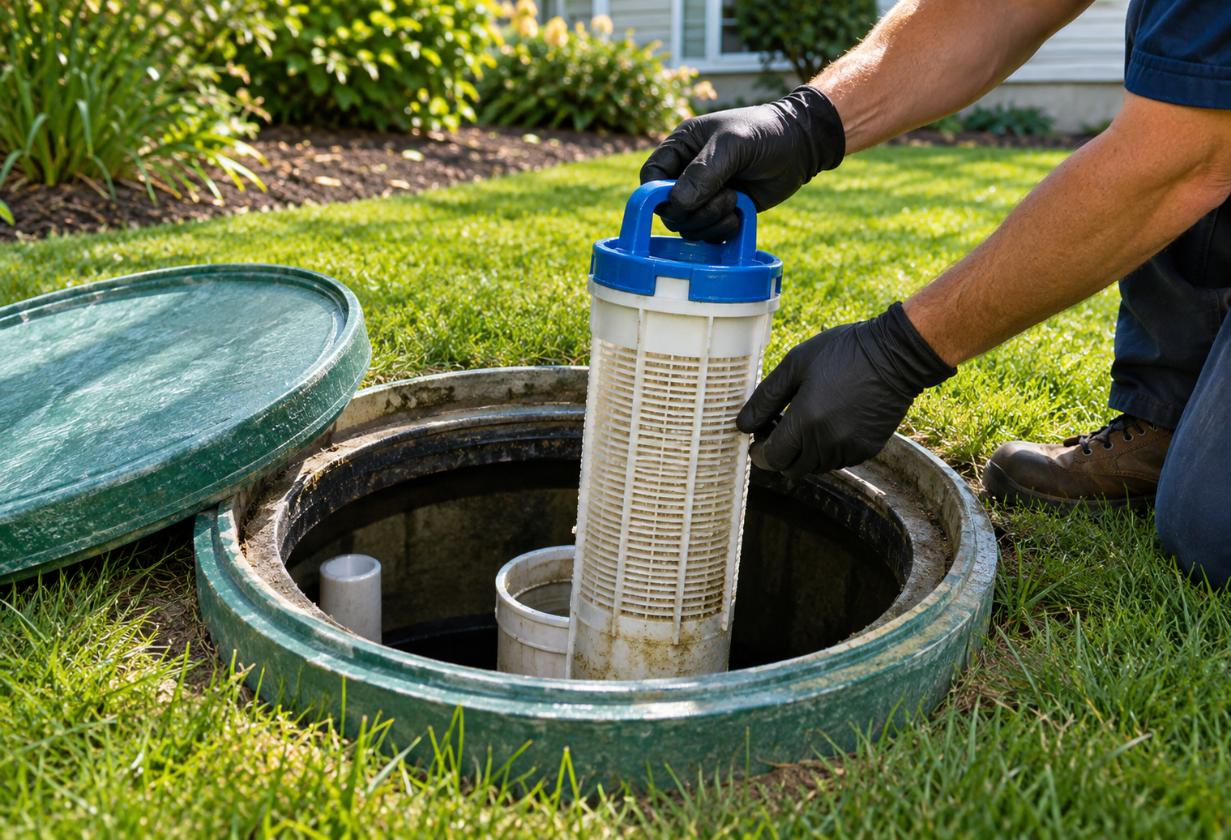
In many conventional septic systems, the effluent filter is installed near the tank’s outlet, where wastewater leaves the tank. However, not every septic system uses the same filter arrangement, and some older systems may not have a filter at all.
The filter typically includes a removable cartridge or screening component designed to capture particles larger than its openings. Its configuration and cleaning procedure depend on the manufacturer and model.
For homeowners in Bethel, Amelia, and nearby Clermont County communities, identifying the equipment installed in your system is the first step toward maintaining it properly.
What Happens When a Septic Effluent Filter Gets Clogged?
A clogged septic effluent filter can restrict wastewater leaving the tank, potentially causing the liquid level to rise and wastewater to back up into household plumbing. The severity of the problem depends on how obstructed the filter becomes and whether additional system issues are present.
Common Clogged Effluent Filter Symptoms
Recognizing potential problems early can help you arrange service before a minor restriction becomes a more disruptive issue.
Watch for these warning signs:
-
Slow household drains: Multiple sinks, showers, or fixtures may drain more slowly than usual.
-
Toilet problems: Toilets may flush sluggishly or experience recurring backups.
-
Unusual gurgling sounds: Plumbing fixtures may make noises associated with restricted wastewater flow.
-
Wastewater backing up: Sewage may return through lower-level fixtures when the system cannot discharge properly.
-
High-level alarms: Certain septic systems have alarms that activate when wastewater levels rise beyond an acceptable point.
-
Recurring drainage problems: Symptoms may improve temporarily before returning as the restriction worsens.
These signs don’t automatically mean the effluent filter is clogged. Similar symptoms can result from blocked sewer lines, plumbing problems, drainfield difficulties, or other septic system conditions.
If several fixtures are affected or wastewater begins backing up, reduce water use and contact a qualified septic professional. Avoid opening the tank or attempting to clear the problem without proper training.
Why Does the Filter Become Clogged?
Effluent filters gradually collect material as they perform their intended function. However, excessive solids, accumulated sludge, and inappropriate items entering the septic system can contribute to more frequent restrictions.
For example, flushing wipes, paper towels, or hygiene products can interfere with wastewater treatment equipment. Even products marketed as flushable may not break down appropriately inside a septic system.
An overdue tank pumping can also contribute to problems when accumulated solids interfere with the tank’s normal separation process. Cleaning the filter without evaluating these conditions may leave the underlying issue unresolved.
How Often Should You Clean a Septic Filter?
How often to clean a septic filter depends on the manufacturer’s instructions, filter design, household water usage, and the condition of the septic system. There isn’t one universal cleaning interval that applies to every home or every type of equipment.
Factors That Affect Your Cleaning Schedule
A larger household may generate more wastewater than a home occupied by one or two people. Similarly, frequent laundry loads, high water use, and excessive solid waste can influence how quickly material accumulates.
The filter’s design also matters because different products capture particles in different ways. Some models may require more frequent attention, while others can operate longer between cleanings under suitable conditions.
Start by reviewing your septic system’s operation and maintenance documentation. If you’re unsure which filter is installed, a septic service professional can help identify it and determine an appropriate inspection schedule.
Should the Filter Be Checked When Your Tank Is Pumped?
Having the effluent filter inspected during scheduled septic tank maintenance is a practical approach. It gives the service provider an opportunity to check for accumulated material, assess the filter’s condition, and look for other concerns.
However, the filter may need attention between pumping appointments. The inspection schedule should reflect the specific system’s needs rather than relying exclusively on tank pumping dates.
In Clermont County, homeowners must also follow applicable operation permit and maintenance requirements established by Clermont County Public Health. Those requirements are separate from the manufacturer’s filter-cleaning recommendations.
Keeping records of filter inspections, cleaning dates, pumping appointments, and repairs can make it easier to track your system’s maintenance history.
How Is Septic Outlet Filter Cleaning Performed Safely?
Septic outlet filter cleaning involves carefully removing accumulated material from the appropriate filter component and returning it to its proper operating position. Because the process involves exposure to wastewater and a potentially hazardous septic tank opening, professional cleaning is often the safest option.
Why Septic Tank Safety Matters
Septic tanks can contain toxic gases, oxygen-deficient atmospheres, and dangerous biological contaminants. An open tank also presents a serious fall or engulfment hazard, even when the opening appears relatively small.
Never enter a septic tank or lean into an open tank to reach a filter. Keep children, pets, and bystanders away from access openings, and leave tank entry or other confined-space work to appropriately trained professionals with specialized equipment.
Anyone performing authorized maintenance should follow the filter manufacturer’s instructions and use suitable protective equipment, including wastewater-resistant gloves, eye protection, and protective clothing. Avoid direct contact with sewage, and wash your hands thoroughly after handling contaminated equipment.
What Does Professional Filter Cleaning Involve?
A qualified septic professional begins by identifying the filter arrangement and evaluating whether it can be accessed safely. The technician can then follow the manufacturer’s procedure for inspecting and cleaning the appropriate component.
Depending on the filter design, cleaning may involve removing accumulated solids, inspecting the cartridge for damage, and confirming that the component is correctly reinstalled.
The technician may also evaluate whether the buildup suggests excessive solids in the tank or another problem affecting wastewater flow.
Homeowners should never permanently remove, bypass, or modify a clogged filter simply to restore drainage. Doing so could allow additional solids to enter and potentially damage downstream treatment components.
When Does an Effluent Filter Need Replacement Instead of Cleaning?
Effluent filter replacement may be necessary when the filter is damaged, cannot be properly cleaned, or no longer functions according to the manufacturer’s requirements. A filter that repeatedly clogs may also deserve closer evaluation, although replacement isn’t always the solution.
Signs That Replacement May Be Appropriate
A professional may recommend replacement when a filter has cracked or broken components, excessive wear, damaged screening surfaces, or other defects affecting its ability to capture solids.
An incompatible replacement can interfere with the system’s intended performance. That’s why it’s important to use a filter appropriate for the specific septic tank and treatment arrangement.
Why Cleaning Alone Might Not Solve the Problem
Repeated filter clogging can be a symptom of a broader septic maintenance issue. For instance, excessive sludge accumulation or inappropriate materials entering the system may cause the replacement filter to become restricted again.
Rather than repeatedly cleaning or replacing cartridges without investigating the cause, have the overall system evaluated. Depending on the findings, tank pumping, line cleaning, or additional repairs may be appropriate.
At Gullett Sanitation Services Inc., our septic tank service and repair experience allows us to help homeowners investigate wastewater system problems. We also provide service and repairs for residential sewer systems, including certain aeration system components.
How Can Homeowners Protect Their Septic Systems Between Service Visits?
Protecting your septic system between professional service appointments starts with managing water use, preventing inappropriate materials from entering household drains, and maintaining the system according to its specific requirements. These habits can help reduce unnecessary stress on the septic tank, effluent filter, and downstream treatment components.
Be Careful About What Goes Down Your Drains
Avoid flushing wipes, paper towels, sanitary products, and other materials that don’t belong in septic systems. These items can interfere with treatment components and contribute to blockages.
Cooking grease, oils, paint, solvents, and household chemicals should also be kept out of the system. Proper disposal helps protect the wastewater treatment process.
Spread Out Heavy Water Use
Running several large laundry loads back-to-back can introduce substantial wastewater into the tank over a short period. Spreading out water-intensive household activities can help avoid unnecessary hydraulic stress.
Fixing leaking toilets and faucets is another useful step. Even a relatively small continuous leak can add significant wastewater to the system over time.
Protect Your Drainfield
Keep vehicles, heavy equipment, and unnecessary traffic away from the drainfield. Soil compaction and physical damage can interfere with the treatment area’s ability to function.
You should also avoid planting trees or shrubs with aggressive root systems directly over septic components. Maintain appropriate vegetation and follow the system designer’s or local health department’s recommendations.
For properties throughout Clermont County and neighboring Brown County, these basic precautions can complement routine septic maintenance and professional inspections.
Frequently Asked Questions About Septic Effluent Filters
1. Does every septic system in Bethel, OH, have an effluent filter?
No, not every septic system has an effluent filter. Some older systems were installed without one, and different treatment technologies may use other filtering or screening arrangements. A qualified septic professional can identify your system’s components and explain whether a filter is installed or required.
2. Can a clogged septic filter cause sewage to back up into my house?
Yes, a severely clogged effluent filter can restrict wastewater leaving the septic tank, potentially causing backups into household plumbing. However, similar symptoms can result from blocked sewer lines or other septic problems. A professional inspection can help identify the actual cause before repairs begin.
3. How often should I schedule septic filter cleaning in Clermont County?
The appropriate schedule depends on your filter model, manufacturer recommendations, household water use, and overall system condition. Clermont County also maintains an operation permit and inspection program for household sewage treatment systems. Follow applicable local requirements and establish a maintenance schedule suited to your equipment.
4. Can I permanently remove my septic effluent filter if it keeps clogging?
No, permanently removing or bypassing an effluent filter isn’t an appropriate response to repeated clogging. The filter helps protect downstream treatment components from suspended solids. Recurring restrictions should be investigated to determine whether tank pumping, filter replacement, or another maintenance issue needs attention.
5. Is cleaning a septic effluent filter the same as pumping the septic tank?
No, filter cleaning removes accumulated material from the filtering component, while tank pumping removes collected sludge, scum, and wastewater from the tank. Both may be necessary as part of a maintenance plan. Cleaning a filter doesn’t eliminate the need for periodic septic tank pumping.
Keep Your Septic System Running Smoothly With Gullett Sanitation Services Inc.
Taking care of your septic system doesn’t have to be complicated, but it does require paying attention to the components that help everything function properly. Your septic effluent filter may be small compared with the rest of the system, yet its role in limiting solids entering downstream treatment areas makes it an important maintenance consideration. Knowing the signs of a clogged filter, following an appropriate inspection schedule, and avoiding unsafe maintenance practices can help you make informed decisions about system care. When questions or problems arise, professional guidance can help identify what’s happening and what needs attention.
At Gullett Sanitation Services Inc., we’ve been serving residential and commercial customers since 1942, providing septic tank services, wastewater management, and system repairs throughout Bethel, Clermont County, and surrounding Southwest Ohio communities. Whether you’re experiencing slow drains, recurring septic issues, or simply want help understanding your maintenance responsibilities, our experienced team can evaluate your concerns and discuss the appropriate next steps. Call us today at 513-734-2227 to learn more about our septic system services and keep your wastewater system properly maintained.